


KISS = Keep it simple, stupid.
Just ‘cus we’re building an online business, doesn’t mean that we have to build it in some ‘internet-specific’ way.
Seems to me that the internet’s potential scale has led many of us to make business a lot more complicated than it needs to be.
Especially because it unlocks these two capabilities:
It expands our potential market from the local area to anyone with a wifi connection.
It allows us to automate, and the purview of what we can automate has just grown significantly due to AI.
So I think it becomes tempting to focus on scale and automation before focusing on the timeless business principles that have worked since the first time someone bought a thing:
1️⃣ Do good work.
2️⃣ Make strong connections.
3️⃣ Be clear about what you do.
Get these right first.
Then layer on growth marketing tactics to reach more people and amplify what already works.
These are the 3 stupidly-simple business principles that need be the foundation of everything you build - and yes, they are in order of priority.
#1: Customer Experience
This is the foundation. Always has been, always will be.
A necessary ‘step 1’ for owning a business is to deliver an exceptional product or service to your client.
Can’t do that? You shouldn’t be in business.
The way I see it, there are two major aspects of customer experience:
👉 Doing good work
This means being good at our craft and deliberately sharpening the skills necessary to add more value to our clients’ lives.
I think an additional aspect of this – and this may be the harder part – is focus.
Many freelancers stall their own growth by spreading themselves too thin, so that the skills they gain from one project don’t really impact the next.
Narrowing your focus – on a specific type of client, project, or offer – will make your efforts compound.
Each project becomes training for the next.
👉 Doing it in a good way
Everything you do more than once should have some sort of system around it.
Nothing complex – I tend to think simple is better, actually. Basically everything I do lives in Google Docs (not exactly high-tech).
But it’s important to map out every part of the process so that you can make it as simple as possible for the client:
→ Be clear and prompt with what you need from them (and why)
→ Set clear expectations up front
→ Deliver work in a way that’s organized (templatize what you can)
→ Break the work into clear stages with visible progress
Vance Morris, the Godfather of Customer Experience, describes it as orchestrating the whole experience so the customer never feels uncertainty, friction, or “what’s happening next?”
It’s simple – just make it seem like you’ve been there before.

#2: Relationships
Alice Lemee, Freelance Writing Coach, wrote:
“I get asked a lot about where to find clients. The truth is that almost all of them come from referrals. This shouldn’t be discouraging! Rather, it should remind you to always invest in relationships.”
This completely correlates with my Freelancing experience, too.
I’ve done the cold outreach strategies…
I’ve done the automated email funnel approach…
But if I were to look back at my past projects and be honest with myself, something becomes very clear:
~100% of my best projects and clients have come from my relationships.
Simple as that - either people I’ve already known, met through networking, or projects I was referred. Those are overwhelmingly the best projects I’ve worked on in my freelance career.
Not to say other strategies are useless – the cold outreach tactics and UpWork job postings are necessary at some points in our Freelance work. We need to get paid, after all.
But my main focus needs to be on building relationships.
And while I love meeting new people of all sorts, we should really focus on meeting two types of people:
→ People who serve the same clients as you, in adjacent ways
→ The clients you actually want to work with
Define these so you can be deliberate with where you spend your time – both online and off. Simply being in the same proximity as this group will give you a massive advantage.
And it doesn’t have to feel like stuffy, ‘collecting business cards’ networking. It can mean…
→ having good conversations
→ being genuinely curious
→ allowing yourself to express more than just “my toned-down work self”
My goal is stupidly simple:
meet cool people.
One of the original promises in the early day of the internet was to connect like-minded people you never would’ve otherwise met in day-to-day life…
Somewhere along the way, that idea got buried under growth hacks and funnels.
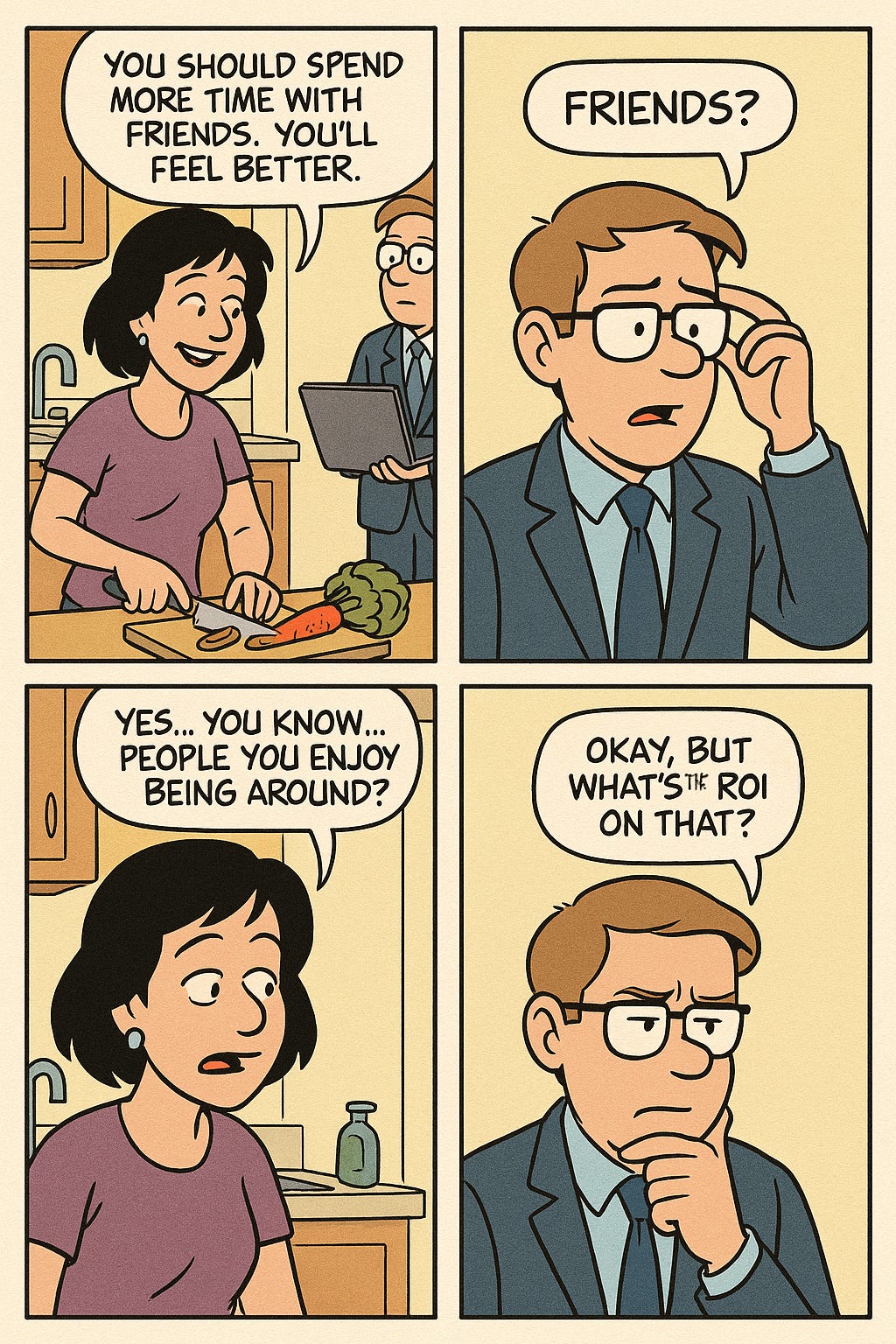
You can build a successful online business by treating every online interaction as a “lead” – simply playing a numbers game – and not recognizing that there’s another human being on the other side of that screen.
Plenty of people have done this, and then packaged their system into an online course for just $999.
But I’d rather try to make genuine connections.
Not just because it’s “good for business”... but because it’s good, full stop.
SURPRISE... we’re actually wired this way.
We’ve evolved to need each other. Community shouldn’t be something you find outside of work hours. Or at least it doesn’t have to be.
#3: Clarity
They say “riches are in the niches.”
And while that may be true, I’ve found it better to arrive at clarity by doing the work, rather than trying to define it all upfront.
I first heard the concept of architect vs. archaeologist from David Perell, describing two completely different approaches to business/career:
🚧 An architect plans a building up front before construction begins, then diligently follows that plan.
A person with a clear goal and long-term plan.
💎 An archaeologist doesn’t have a clear vision of where they’re going – this person follows their interests, collects experiences, and slowly uncovers a deeper purpose along the way.
In hindsight, every single “misstep” – no matter how random at the time – was a critical part of the archaeologist’s path.
I think of myself as an archaeologist. Seems to me most Freelancers are.
I used to view this as a flaw. I’ve never been able to set a “5 year goal” that I actually stick to, but I think there’s actually something valuable about this attitude. As Shane Parrish explained on the Crazy Good Turns podcast:
“When you focus on the outcome, you’re focusing on something very distant in the future. And if you focus on something distant in the future, it’s really hard to see how I get from here to there. And so what you tend to do is just take the shortcut.”
So instead of defining an ‘ideal path’ and then following it step by step, it may be more beneficial to simply focus on the process:
Do great work. Meet great people.
And along the way, start to clarify who you are – your unique niche. David Whyte’s concept of the conversational nature of reality has helped me understand this process:
🫵 You want something.
🌍 The universe wants something from you.
🤝 And the conversation is what happens between the two.
And this is sort of what happens when finding your niche, too.
You want something…
→ The projects you enjoy most
→ The clients you’d love to work with
→ The media formats that interest you most
The market wants something…
→ Where does your work make the biggest impact?
→ Where is your work most needed?
→ Who’s willing to pay the most for your work?
Your niche lives at the intersection of these.
And once this intersection starts to appear, it’s important to name it. Because defining your niche as a Freelancer has ripple effects on every aspect of business:
💸 What you’re paid… as much as we may like the marketplace to be a complete meritocracy, it’s not. Your positioning will have a bigger impact on your revenue than skill.
👀 Who pays attention… the way you speak about yourself determines who you attract, and who you repel.
💬 How people talk about you… especially critical in a referral-driven business. People need a simple way to explain what you do.
This is where most Freelancers hesitate – understandably so.
Saying “this is my niche” can feel like closing doors. But when done right, choosing a lane for your business should open up way more opportunities than it shuts down.
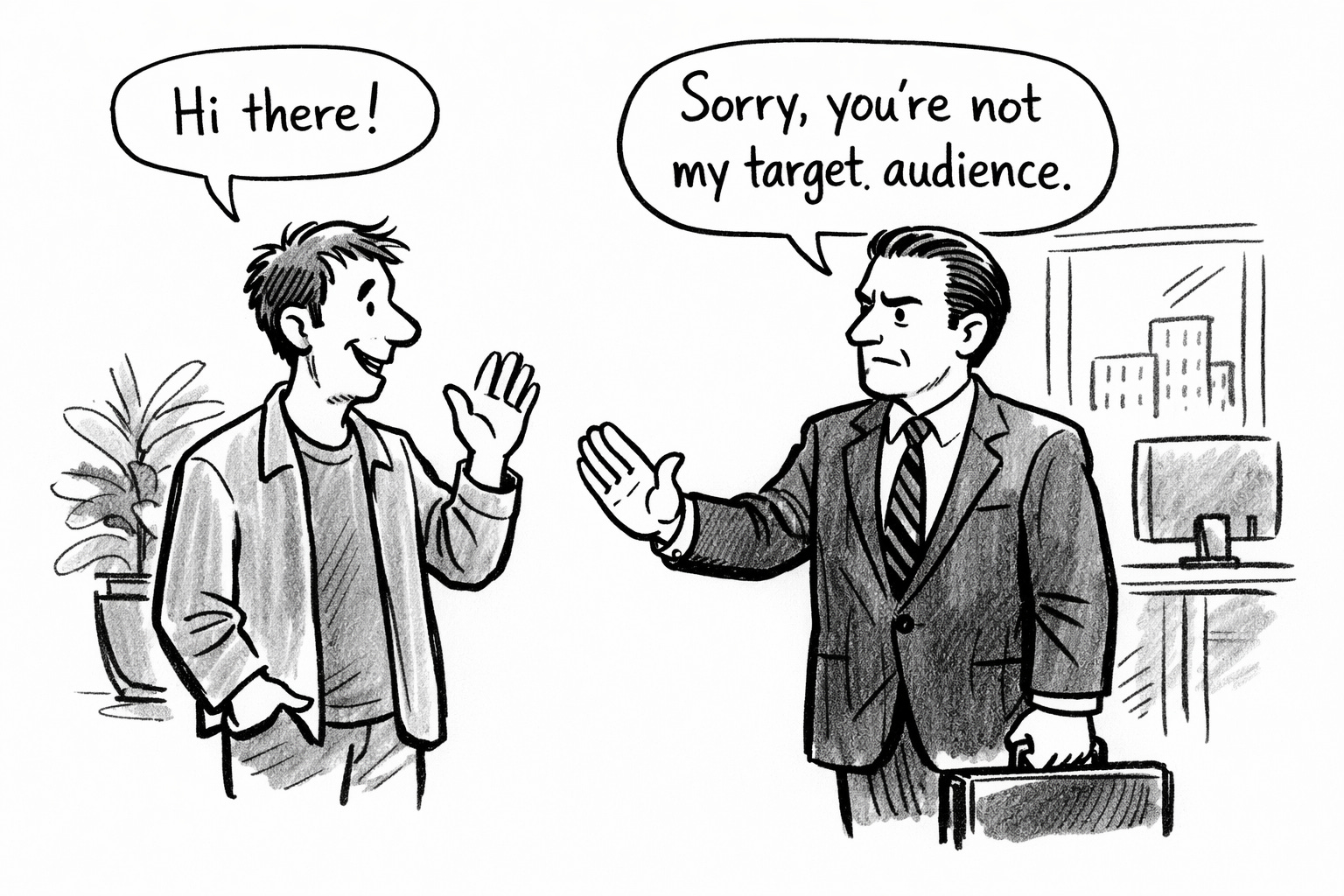
So start by defining who your work is for – a very specific audience you serve. As Seth Godin says:
“Make difficult decisions about who it’s for, and then ignore everyone else.”
Once you’ve gotten clear about the who, everything else fall into place more easily:
What are you selling them? (start from: what problem do these people need solved?)
Where are you sharing it with them? (start from: where do these people spend time?)
Again… keep it simple, stupid.
There’s a version of business where you generate thousands of leads, expect most of them to ignore you, and hope the math works out in your favor.
And then there’s another version.
One where you focus on doing good work, building real relationships, and being clear about what you offer — and only then, thinking about expanding your reach.
Neither path is objectively right or wrong.
That’s the gift of freelancing.
You get to choose.
Which business do you want to run?