

For some reason, they made us think it needs to be hard:
“Hard work” is considered a virtue in and of itself.
“Sacrifice now to succeed later.”
“Nothing worthwhile comes without suffering.”
It made me visualize success as something that demands a ton of friction – forcing myself to sit at the laptop for another few hours by deadening the deep part of me that’s ants-ing to do anything else.
I’m not sure it needs to be this way.
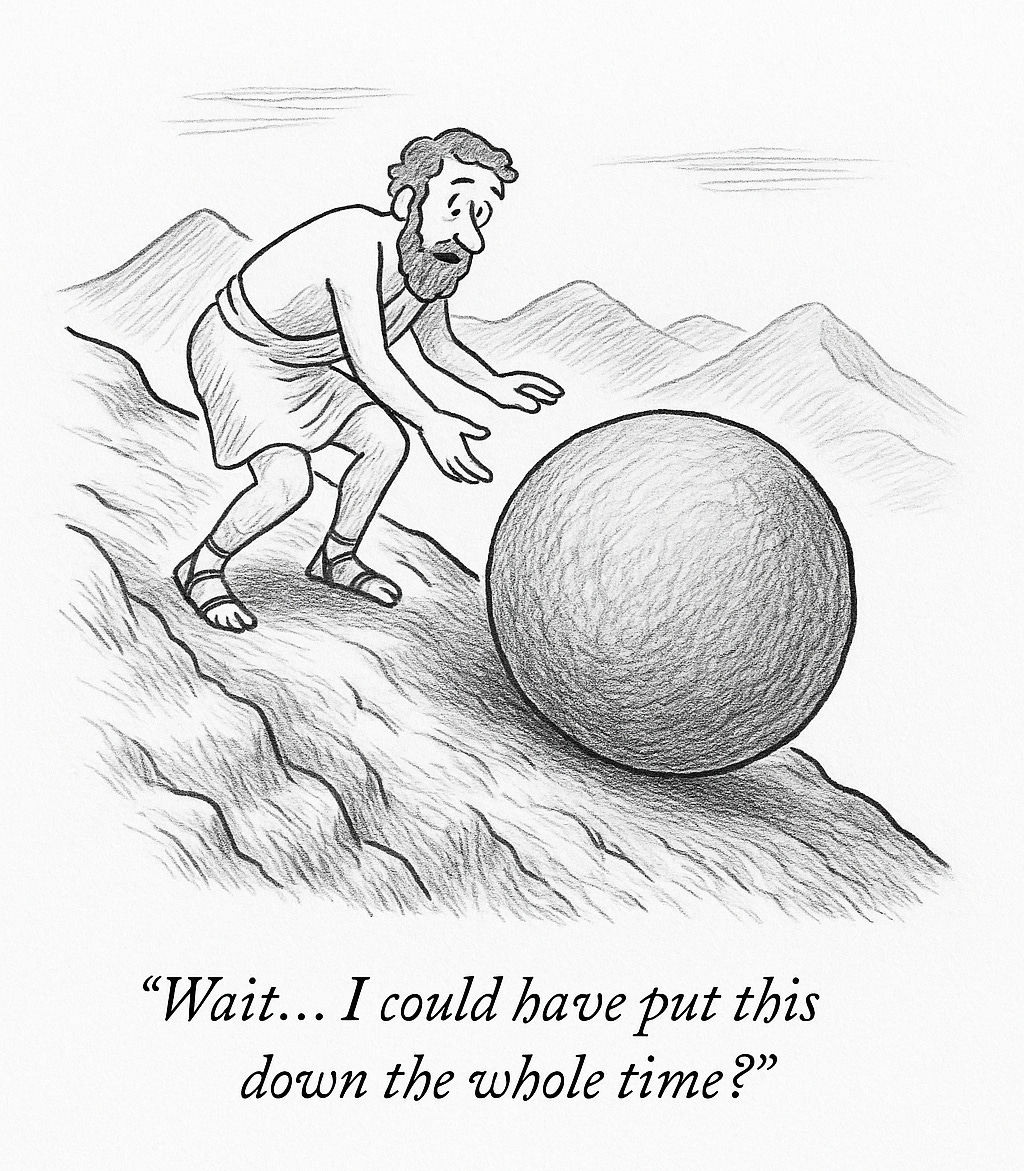
Personally, I refuse to burn myself out like this. So I’m operating under the belief that if I operate like ⬇️ this ⬇️, I’ll actually be more effective than if I grind in a way that’s scattered.
Consistently: Showing up to improve myself a tiny bit every single day… but not to the point where it becomes excruciating.
Focused: Deliberately building skill and learning in specific areas that’ll directly help my clients and my work.
Intentionally: Treating everything I do as a rep – not just something to finish, but as a path to improvement.
Driven by Curiosity: Because it doesn’t have to be boring:
Find the aspects of your craft/industry that are interesting… hone in on those.
Find the thought leaders in your craft/industry that are entertaining… learn from them.
Find the real-life outcomes that truly drive you (i.e. family, impact, future freedom)… and connect your work to those.
Then just keep pushing the goal posts… 🥅
Some people operate well with long-term goals. Big, 10-year visions. I don’t, so I can’t really speak to that.
If I had to guess where I’d be today 5 years ago, I would’ve been completely wrong. And I love where I’m at right now, so I’m not sure I want to set a long-term plan for myself.
Instead, I think about simply showing up every day and moving the goalposts forward a little bit at a time.
It’s the approach Abraham Lincoln used (as explained by Cal Newport):
Lincoln was a voracious reader – but it doesn’t seem that he read randomly. He read to learn about very specific things that would make him more valuable.
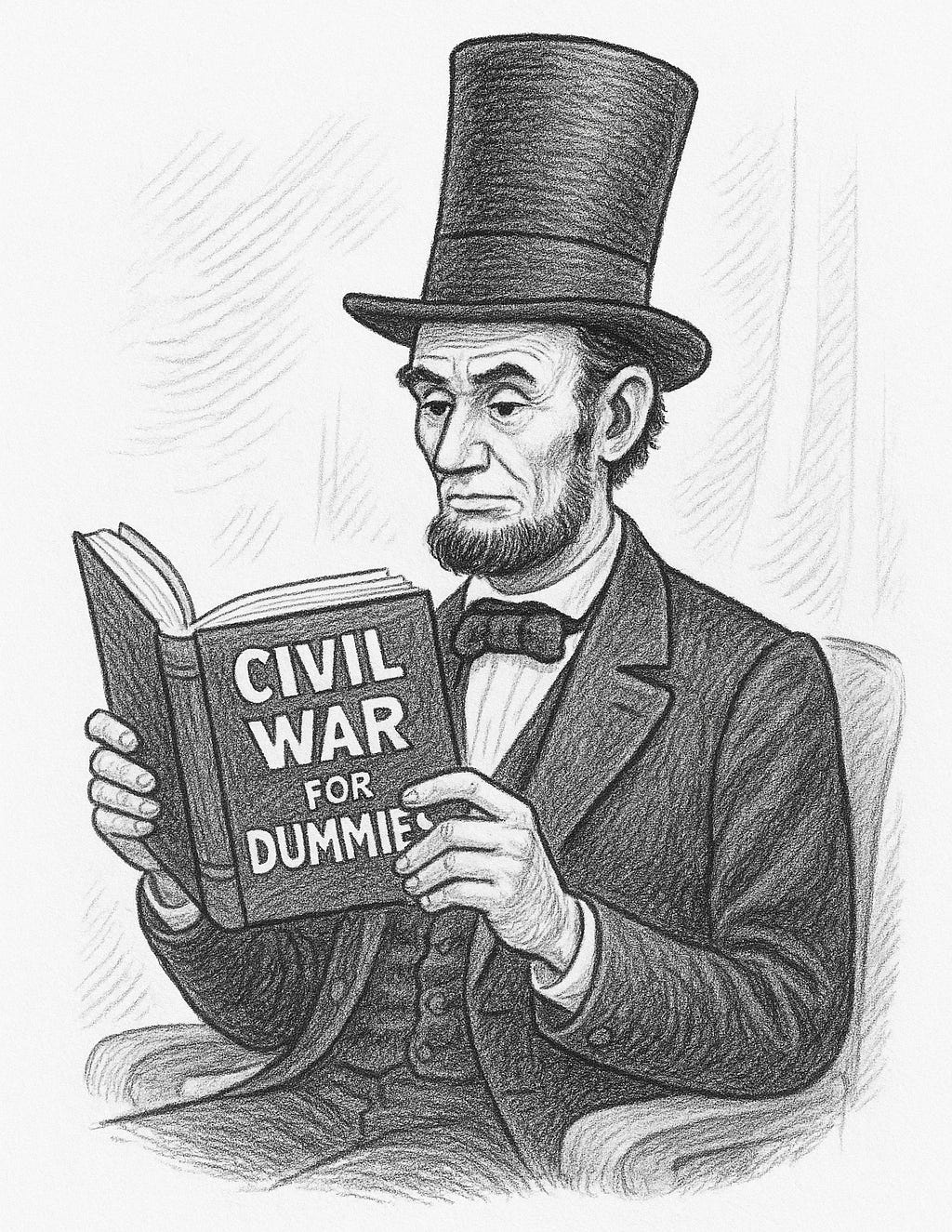
“For Lincoln at first [it] was really self improvement. Then as he got solidified, he began to redefine useful to mean useful to other people:
At first, his town. Then useful to his county and then as he moved up in the legislature, useful to the whole state of Illinois. And then he moved to the national scale.”
And I use this perspective to think about growth in my own freelance business:
1️⃣ Start by developing skills for yourself.
This stage is about building capability in your core craft.
It’s getting good enough to simply be valuable, so you can make some money and pay your bills.
For me, it’s learning to be a good enough copywriter to feed myself and pay rent. Learning to deliver enough value to clients that it’d be worth paying me.
2️⃣ Then developing skills for the people around you.
Start learning how your craft fits into the bigger picture for your clients.
For me, it’s focusing on the larger growth outcomes my clients really care about… not just the copy.
This is where you go beyond deliverables and focus on outcomes. Start by helping your existing clients in a more strategic way – asking better questions, thinking holistically, and spotting opportunities.
(Some clients will want this. Others just want deliverables. No judgment, just know who’s who.)
3️⃣ Then develop skills to expand your impact.
This stage is about selling specific outcomes, not just your hours.
For me, it’s about taking what I’ve learned from past projects – what works, what makes the biggest impact, what clients care about – and packaging that into a clear, outcome-based offer.
Instead of selling a copywriting service, I help clients clarify their Differentiation Strategy and create messaging that reflects that.
It’s not about selling time anymore. It’s about selling results.
And to do that, you need to deliberately learn and develop a deep understanding in how your work fits into your client’s larger business machine.
4️⃣ And so on and so forth.
Deliberate vs. unconscious practice
“I fear not the man who has practiced 10,000 kicks once, but the man who has practiced one kick 10,000 times.”
Bruce Lee
There are two types of practice:
1️⃣ Deliberate practice: Purposefully choosing a particular skill, isolating it, and working on it with full awareness.
This is the type of practice that most of your competitors are not doing. So even a small amount of deliberate practice will put you miles ahead of the pack.
2️⃣ Unconscious practice: The passive improvement that happens over time simply by living, working, and accumulating experience day after day.
Like James Clear argues in Atomic Habits, every tiny action we take is a vote for the person we are becoming.
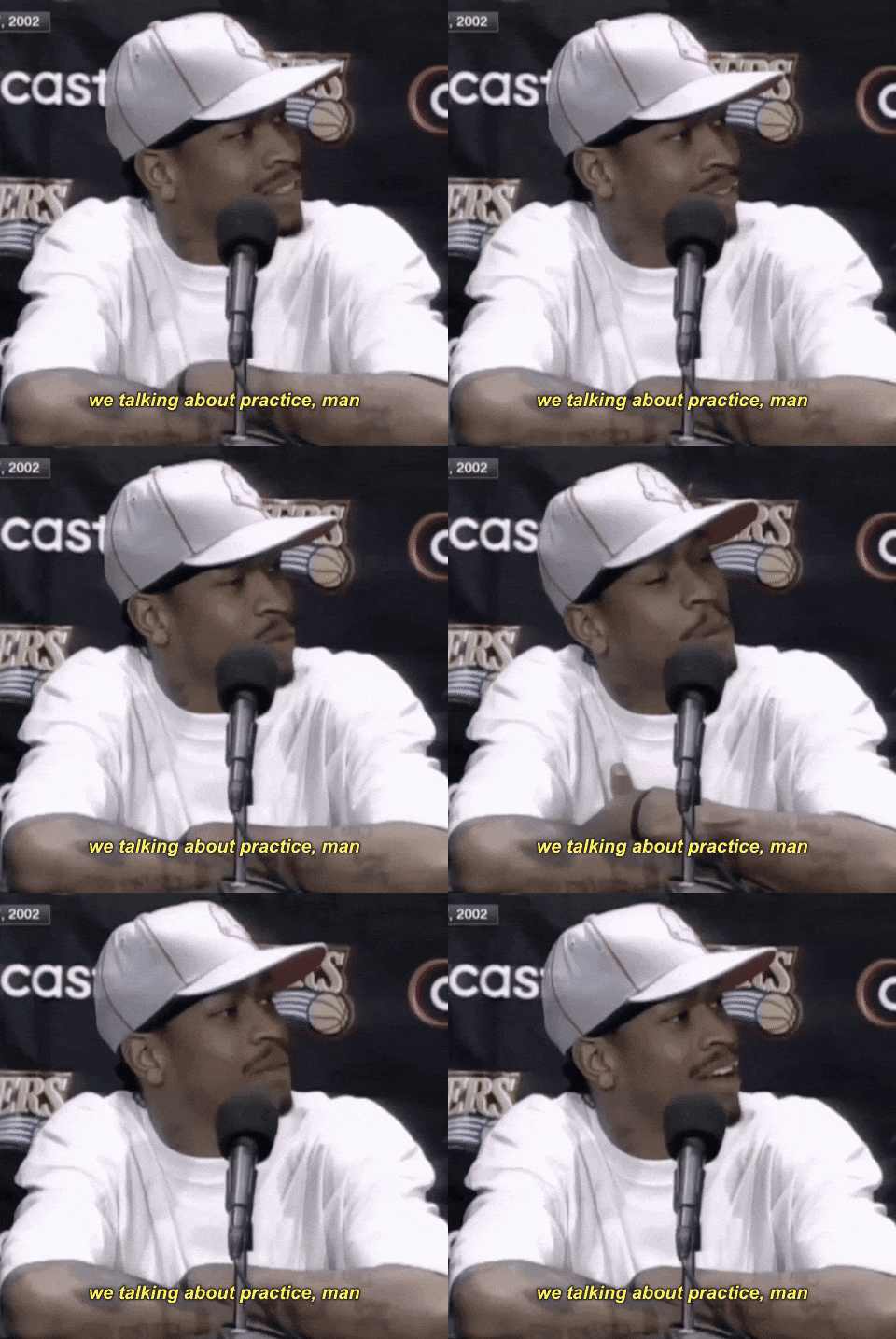
Deliberate Practice
One example of deliberate practice from my own craft (I’m a copywriter) is copyworking.
It’s a practice I discovered from Eddie Shleyner. And when I was early in my career, this deliberate may have been one of the most critical aspects of my improvement.
I’d sit down a couple nights a week and literally hand-write or retype great copy from the best in the industry. Line by line. Word for word.
It’s slow and borderline tedious… and definitely not productive in the way people obsess over (it ain’t getting me paid). But it trained my brain to absorb rhythm, structure, argumentation, and flow in a way that I believe was instrumental in my development.
Hunter S. Thompson used to do this, manually transcribing Hemingway and Fitzgerald to internalize the feel of great writing. And that’s the essence of deliberate practice:
Choosing a very specific skill you want to get better at, isolating it, and doing focused reps.
Small inputs in this area lead to big returns. And almost none of your competitors are willing to do this part.
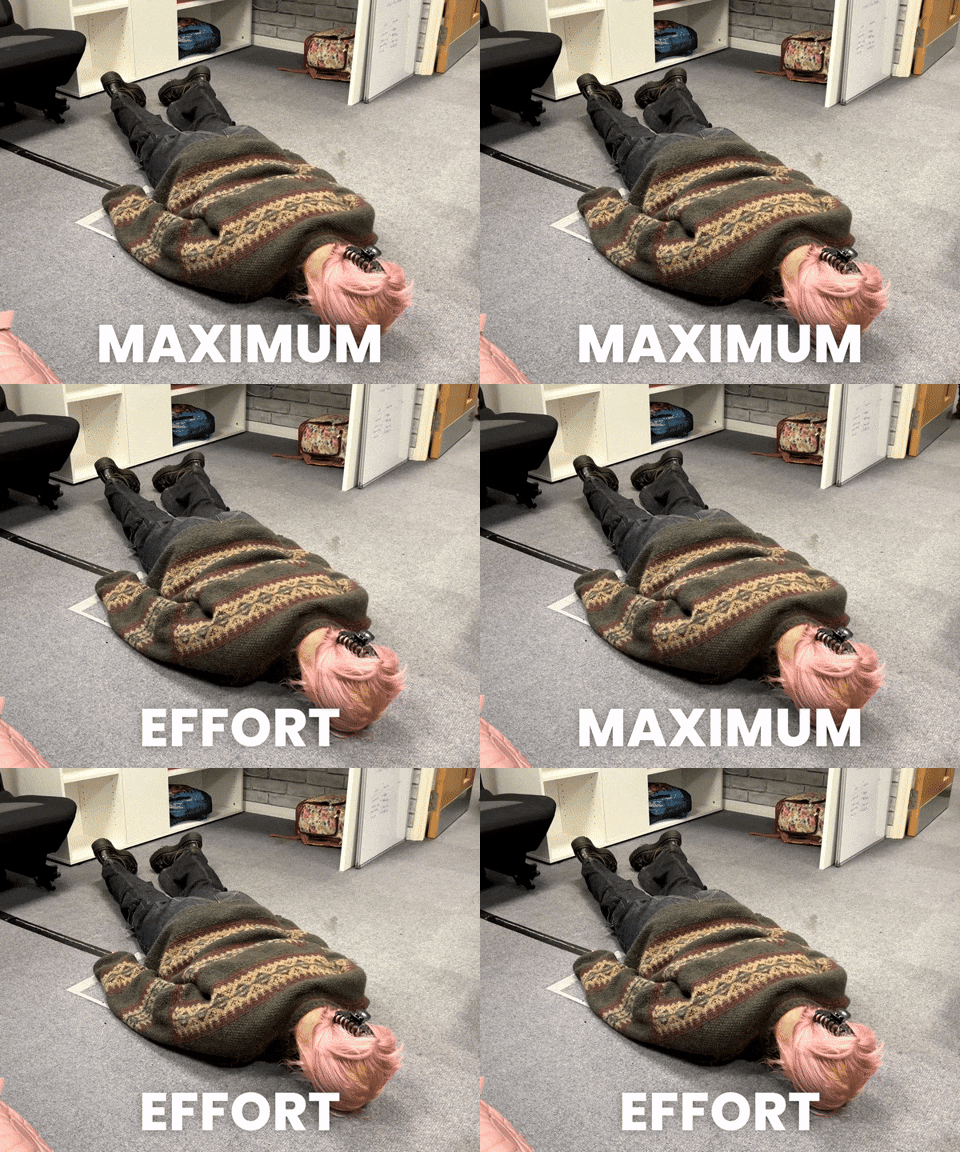
Unconscious Practice
This practice is the one we don’t think about as “practice” at all.
As a human being, we are always getting better at something. Every action you take is reinforcing certain skills, habits, and patterns.
That’s unconscious practice: the constant, passive accumulation of reps by simply doing the work.
And as a freelancer, the projects you choose determine what you end up unconsciously practicing.
If you’re intentional about it, every project becomes:
a rep toward the kind of work you want to be known for
a rep toward the skill you want to sharpen
a rep toward the positioning you want to grow into
a real-world piece of your future portfolio
But this only happens if you approach your projects with this mindset.
If you don’t, it’s easy to slip into “just completing deliverables,” and you lose the chance to let the work compound.
Every project is practice, and so you must ask…
In what way can I use this project as a way to fuel my growth?
The goal of any practice is to develop Unconscious Competence in your craft.
That’s the stage when the fundamentals become automatic. When the things you once needed to consciously force now happen without friction.
For me, it’s been with copywriting:
When I first started writing direct-response copy, I was painfully aware of every persuasion principle I was trying to “use.” Thinking things like…
→ okay, here is the part of the copy where I need to really agitate the problem…
→ now I need to add the “aha” moment…
→ cue the testimonials so people actually believe me…
It felt formulaic because it was.
But after enough reps (both deliberate and unconscious), you stop forcing tactics and start writing with intuition.
The templates and principles don’t disappear. But they’re no longer top-of-mind… they’re simply a part of the way you think and execute tasks.
Developing your taste for “good” 🔍
It’s an intangible skill, which is why I think it gets overlooked. But I think that in the AI age, your taste will be increasingly important.
In a world where it’s becoming easier and easier to create…
what will matter more is your ability to sense what’s worth making.
Taste is the difference between publishing for the sake of it and publishing content that actually resonates with someone on an emotional level.
So, I think it’s important to refine your internal compass for what “good” actually looks and feels like in your craft.
How do you do it?
→ Consuming a lot of great content (inside and outside of your craft)
→ Tune into your genuine emotional reactions (this is a practice – the more we do it, the easier it becomes to tune in)
→ Collect the work that resonates
Start a swipe file for your favorite pieces within your craft. I’ve recently become a lot more intentional about this myself.
Rick Rubin, the legendary and notoriously non-technical music producer, explains the purpose of deliberately developing your taste:
“The objective is not to mimic greatness, but to calibrate our internal meter for greatness. So we can better make the thousands of choices that might ultimately lead to our own great work.”
To thrive as a freelancer in a crowded marketplace – to be seen as a true expert instead of just a contractor (and that’s the only way for us to grow as freelancers) – you need to build an expert-level standard of excellence.
So all this to say…
I don’t believe that thriving as a freelancer requires grinding your face off.
Simply caring about your work is the most reliable insurance that you’ll make it as a freelancer.
I’ll leave this with a piece from Paul Millerd’s blog post – Become More Serious:
I think it’s worth trying to become more serious about your life.
The most serious people I know are the most playful, the most alive, and the most inspiring.
But we think of being serious as a bad thing. “You’re too serious.”
No.
To be serious is to give a damn at a time when most people have stopped giving a damn.
Doesn’t need to be extremely hard. Just give a shit.